
If You Can Handle This One Feeling, You Can Build Almost Anything
Box Cutter Co. Free Issue No. 97

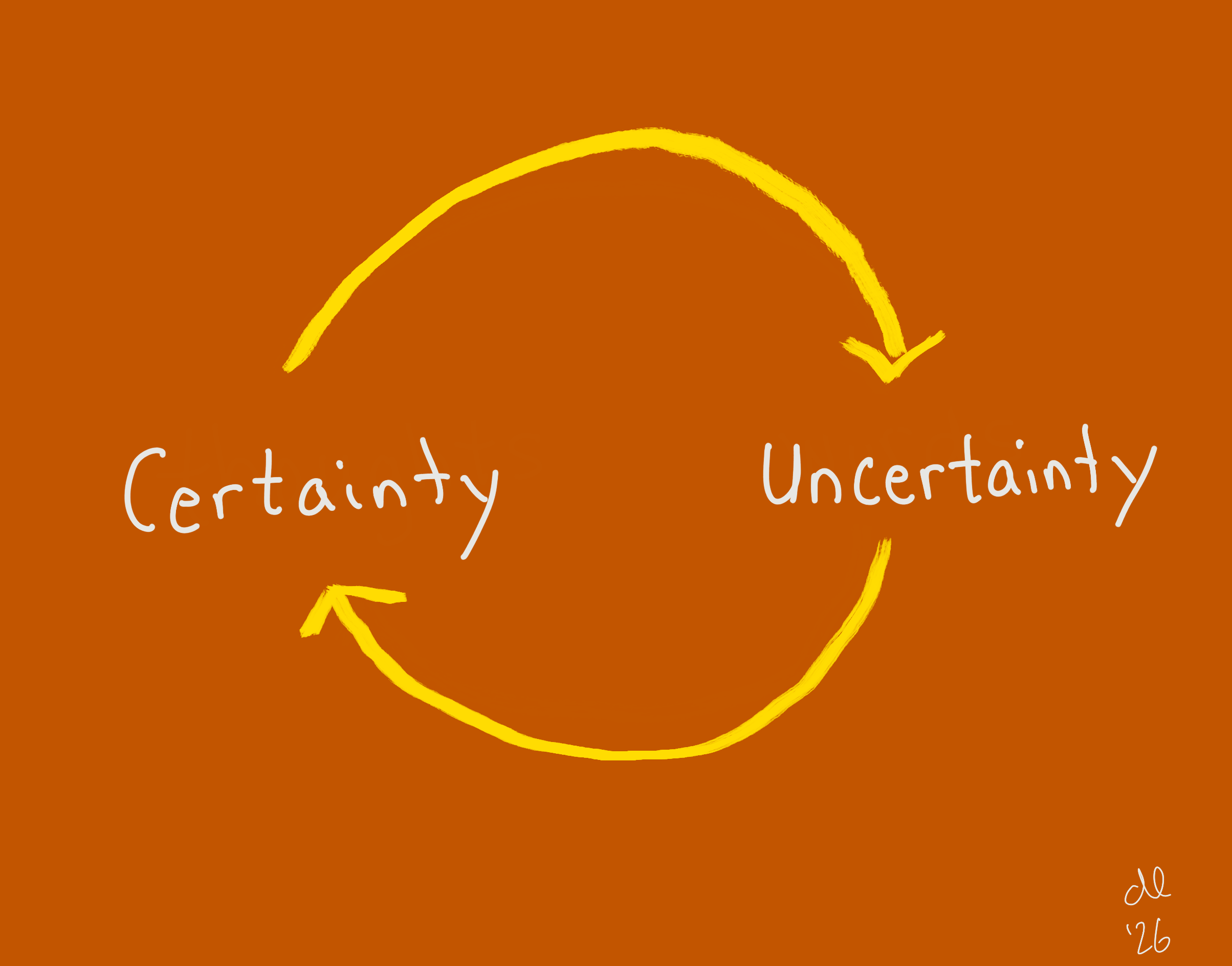
If you could know — right now — precisely when you die, would you want to know?
Most people say no. Generally, well under 5% say yes.
It’s an odd contradiction when compared to how much time many of us spend our lives chasing certainty.
We treat Not-Knowing as a flaw. “Ignorance” is often considered very negative. When, by definition, it simply means “not-knowing.” Reality is… we are far more ignorant than we are knowledgeable.
Still, many of us “research” things to death. Squeeze the future into supposed “plans,” numbers, and five-year visions. Relentlessly scan the Internet for the secret sauce, the special template, the trick or tactic to rule them all.
Yet when you offer real certainty—such as the date and time of death—people decline.
So… maybe the problem isn’t uncertainty?
👉 Maybe the problems are the feelings uncertainty creates.
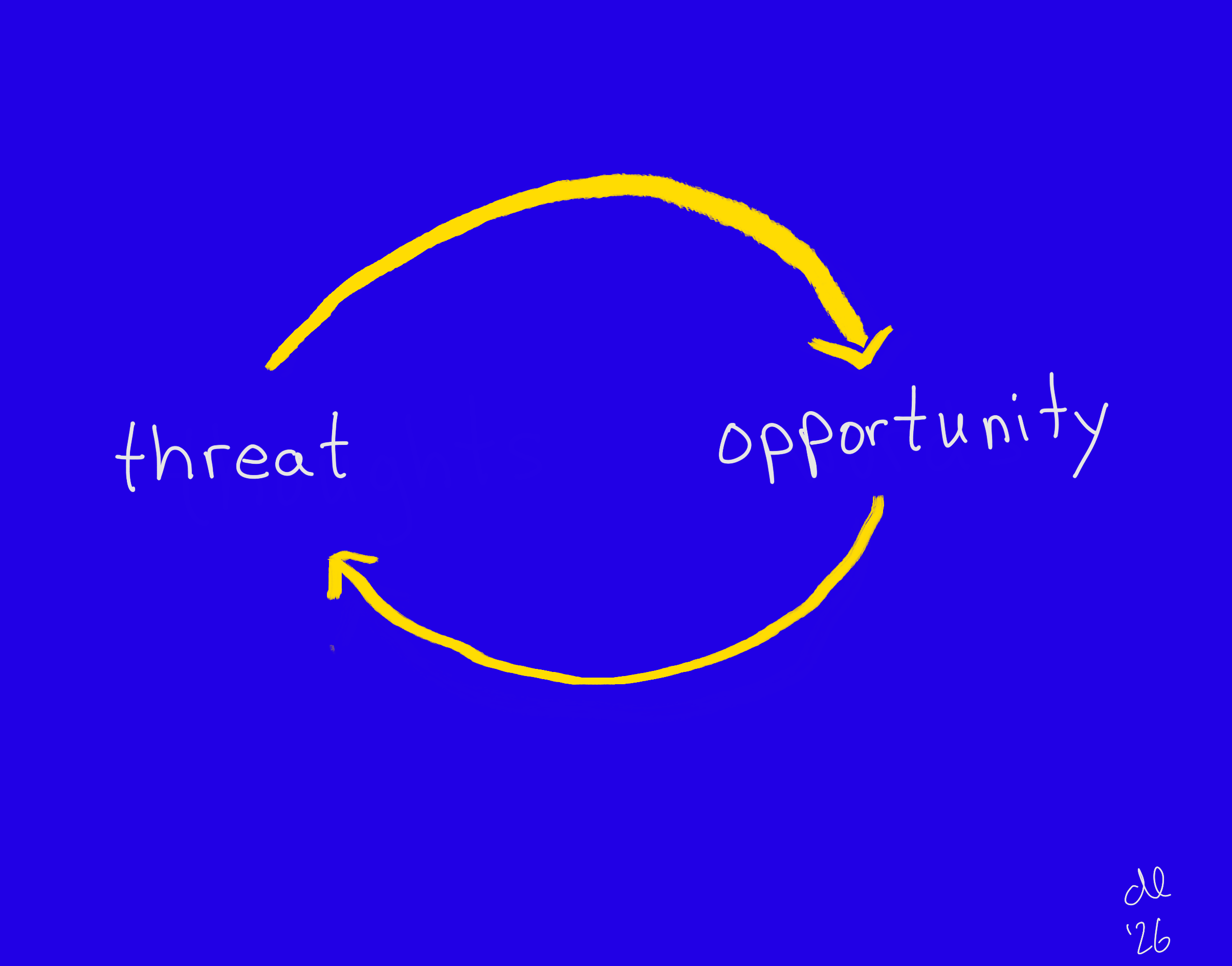
For most, these feelings connected to uncertainty are familiar: tight chest, busy mind, an urge to settle things. The push to find “the answer”, lock the plan, calm the nerves, control the story.
These feelings, for example, come when asking someone on a date, asking someone if they want to marry you, asking a boss for a raise, and so on.
Uncertainty is a powerful instigator of emotions and feelings.
And… if you can get a handle on these feelings and emotions—without running, numbing, or faking certainty—you can do so many things that cause other people to stall, turn in the other direction, quit, walk away, never start or try, and so on.
This is about your relationship with Not-knowing — with Uncertainty.
And this relationship takes different shapes at different times and in different contexts, and varies greatly between people, even those in the midst of the same event.
The “Uncertainty” Trap
A common trap is thinking uncertainty is only one thing, but it actually takes many forms. If you can’t tell them apart, you’re in danger of utilizing the incorrect response. Here are at least four:
Chance is randomness. Life has built-in unpredictability. Even the fact that you or I are here, alive, writing and reading this—is a subset of countless chance occurrences over millennia.
Ignorance is missing information. You don’t know yet, or we don’t know yet. Maybe an answer exists, we just don’t have it. Or, maybe what we’re uncertain about is so far beyond human comprehension — like, what will Artificial Intelligence look like in 5 years?
Risk is uncertainty you can estimate. You can map a few outcomes and see downsides. However, it’s still an estimate and dependent on so many factors, including many unknowns.
Luck is when chance lands on you in a meaningful way because timing and context make it matter. It’s rare to hear a successful online creator suggest their success may be largely based on Luck (combined with chance).
Most people overuse one move for all four. For example, they keep researching something that was actually just chance.
They avoid learning things that might reduce ignorance — or try to learn as much as possible about something that is simply unknown and uncertain (like… AI evolution).
They treat risk as certainty, meaning they confuse an estimate with a guarantee. Or, forgetting every estimate sits on assumptions, and assumptions can be wrong. (Don’t need to look much further than weather forecasts)
Many turn luck into a story about their own worth, either positively or negatively. For example, buying into some online creators’ strategy for building an audience and revenues, and then when it doesn’t work, shitting on themselves for failing.
When, in fact, the advice came from someone who simply got lucky — but sells a story that it was pure skill, strategy, and implementation. (Look around Substack or any other social media platform — they’re full of these).
Smart people get stuck in forms of uncertainty. And here’s the deeper reason they get stuck.
Your Brain Hates Uncertainty
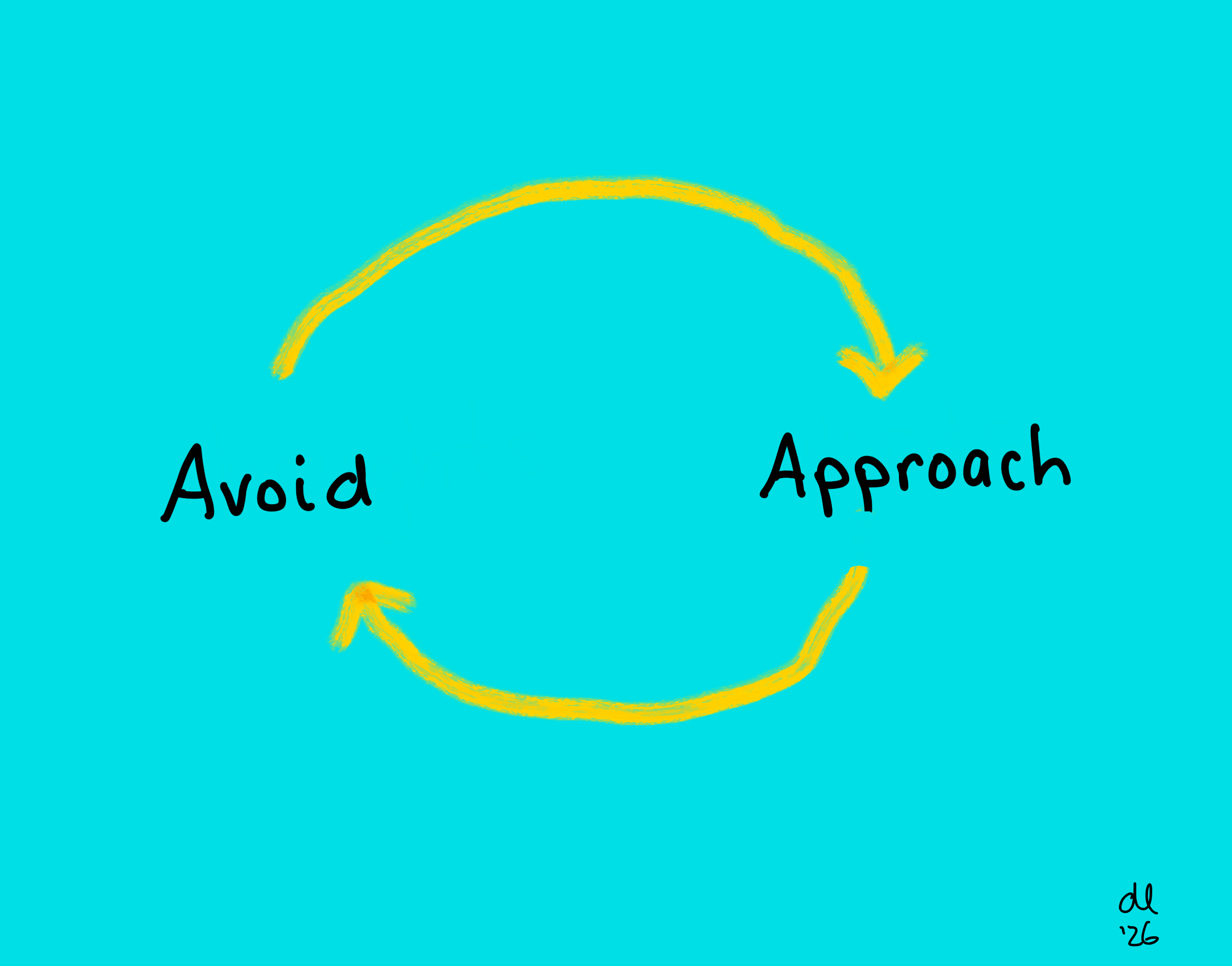
In uncertainty, your mind tries to protect you from discomfort — So it cheats.
It scans for threats (especially in your memory, which is fallible). It imagines losses and creates strong storylines around them. It overweights the worst-case scenario. It grabs at “clarity” the way a drowning person grabs a floating branch.
All of these are even more amplified if we’re lacking in sleep, haven’t eaten, are under duress, feeling unsafe, and so on.
This is why uncertainty often feels like danger even when nothing bad is happening. And it’s why so much “planning” is simply emotion-management in disguise.
The challenging mental work (mindset-work) is learning to stand in feelings of uncertainty long enough to choose well. Even, leaning into it. Which leads to a Box Cutter Co. idea that many might overlook.
How *Not* to Create Something New
You can’t create much new from inside what you already know.
If you want originality, you don’t get it by repeating what already worked. It comes from leaning into edges where there’s no model, or template, or script, yet.
But!… certainty is seductive. Certainty keeps us inside our box. Certainty keeps you copying. Certainty keeps you “safe” (or at least perceptions of safety).
For example, consider the difference between people’s fears of flying as compared to driving in a car. Far more people are deathly afraid of flying than driving. And, yet.. driving in a vehicle — by the stats — is far more dangerous.
A larger life requires an extended box. And that expansion happens at the edges — by pushing the margins. If we want to create a larger life (or, even different), then we must expand the size of our individual boxes… get to the edges, then lean beyond them.
That “lean” is where uncertainty rages. For anyone who skis, or mountain bikes, or sky dives… It’s those moments when gravity becomes a mighty force.
Or similarly, paddling into a building wave — surfing or paddle boarding or kayaking.
Curiosity gets you to the edge and plays a big part in acknowledging what you don’t know. Persistence keeps you steady while you learn, as well as unlearn. Grit plays a part.
But, for almost everyone, Uncertainty doesn’t go away. It’s your relationship to it that can change.
Curiosity Is How To Get Out Of Your Box
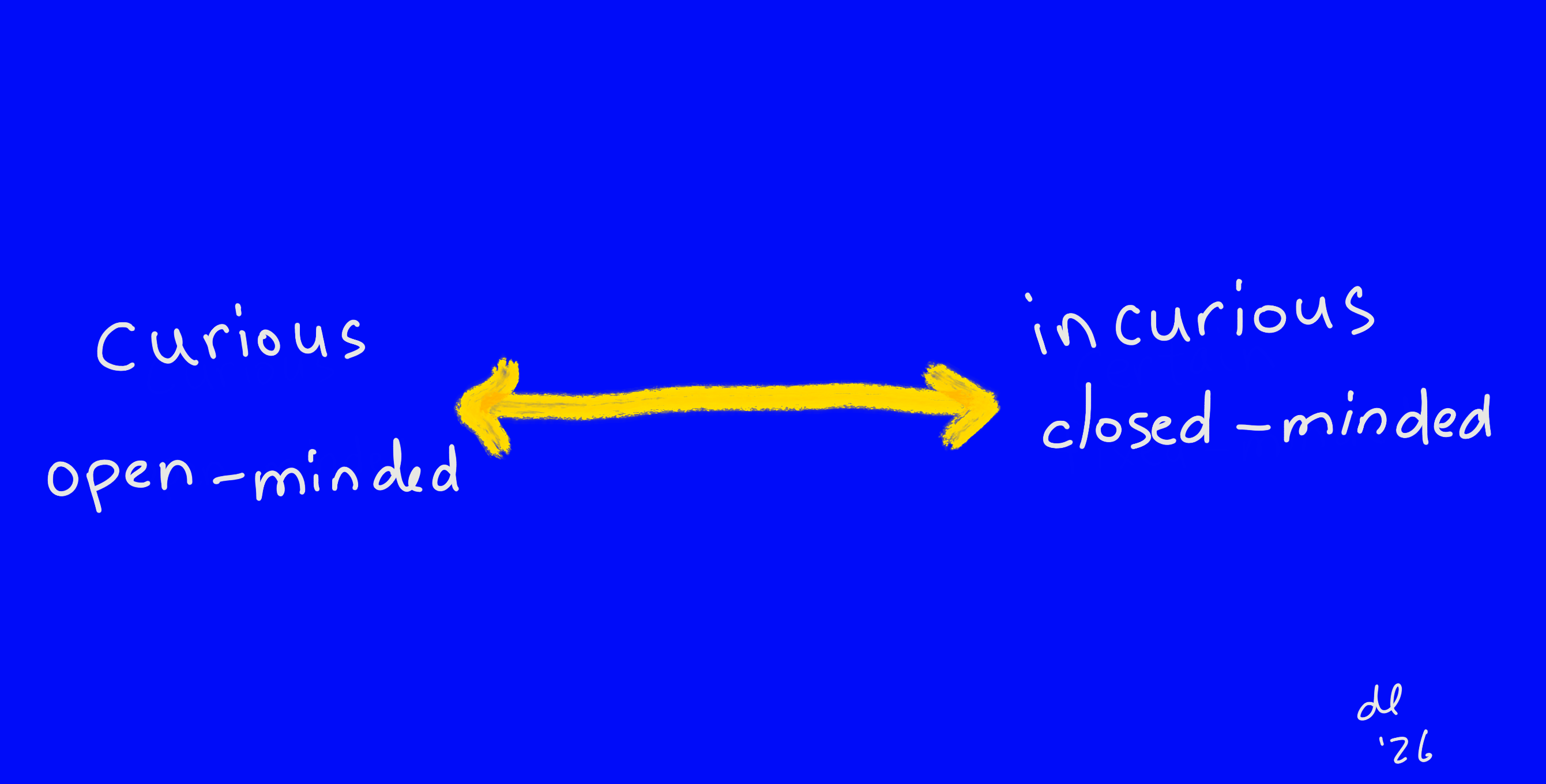
Fear says: What if this goes wrong?
Curiosity asks: What’s actually here? What’s true? What’s accurate? What’s possible? What can I learn?
Curiosity doesn’t remove risk. It simply stops our minds from shrinking the world down to threat-only thinking. It gives options, which matters even more now because the digital world is a certainty machine. It pumps out clean stories, clean frameworks, clean timelines.
And those stories come with hidden biases.
Survivor bias and the internet’s success stories
Online, you mostly see the winners.
You see the creator who “figured it out.” The business that “cracked the code.” The person who “quit their job and never looked back.”
You rarely see the thousands of attempts that didn’t work. You rarely see the offers that didn’t sell, posts that went nowhere, projects that ran out of steam, the businesses that didn’t survive (which most new ones don’t).
That’s survivorship bias: learning only from survivors and mistaking their path as the only path. This pushes people toward copying — and toward certainty. It pushes people toward “just follow my 6 steps” (for $99.99).
It also makes you uncertainty feel like a personal problem — when it’s often just part of reality. Reality, life, the universe… is … uncertain.
If you want a life that’s actually yours, you can’t learn only from the highlight reel (and social media and platforms like this are full of them). You have to learn from misses, mishaps, failures, and near-misses, too.
Or, from the folks who have been publishing online for 5 years, 10 years, 15 years, or more. And yet, keeping their day job (or night job). This is where meaningful education lies, leading to something simple… 👇
Meet the moment, then the next, then the next
The only real control we have is how we respond to what’s happening in the current moment.
Uncertainty triggers sensation. Sensation triggers emotion. Emotion triggers story. Story pushes you toward reaction.
Your advantage is the pause.
A breath. A beat. A moment of choice before your mind runs the old program.
This holds on a mountain bike when you’re on a tight downhill trail. It holds on a steep ski run as speed increases.

It holds when you’re about to press publish on something that might flop.
Often, the only certainty is this: you have to make a move. Not the perfect move — just the next move.
And you don’t build a creative enterprise by avoiding that moment. You build it by meeting it over and over and over. One decision. One post. One offer. One conversation. One turn. Then the next one…
4 Box Cutter Co. Principles For Living With Not-Knowing
These don’t remove uncertainty — they can simply improve your relationship with it.
1. Enough-ness
Enough-ness prevents uncertainty from eating you alive. You decide what “enough” effort, time, exposure, and income looks like. You stop outsourcing your standards to gurus, parents, teachers, or status games.
2. Figure-out-able
Figure-out-able keeps you moving with your intention — without pretending. You treat life as learnable and unlearnable. You don’t demand guarantees. You stay responsive. You adjust as reality gives feedback. In almost any work I’ve done over the past decades, my mantra with teams is “Stay fluid and flexible…”
3. Thinking about Thinking
This keeps you from believing every story your nervous system invents. It helps you catch the mental tricks: worst-case spirals, comparison envy, fake certainty, “I’ll do it when…”
4. Write to Learn and Unlearn
Writing turns your thoughts into language. And, vice versa, when you read others’ words, it creates thoughts. By writing these out — especially free-writing — but also public writing— You learn what you actually think (and why). You unlearn borrowed voices telling you safety is the goal. You surface assumptions (yours’ and others’). You see patterns. You see what fear is protecting and what curiosity can unleash.
Capability, possibility and intentionality all grow in these principles. These do not grow in certainty, or certain times, or waiting for a clear answer before making the first move.
A Better Ending Than Certainty?
Whether we come to the edge of uncertainty through inspiration or desperation, the principles generally remain the same. Some people arrive because they want more (or different). Some arrive because the old plan collapsed—job loss, a marriage ending, a death, a health scare.
Same edge. Similar fogs of uncertainty. Same feelings to work through.
The invitation is simple: stop treating feelings of fear as stop signs. Try to treat it as a signal you’re nearing the edges of something alive — intentional. Extending your box —maybe even cutting out of old ones.
If you can handle these feelings of uncertainty—without running, numbing, or faking certainty—you can build almost anything worth building. Approach it with curiosity (like a bird watcher), with fluidity and flexibility, and with the intention of learning (and unlearning) — and, in this, the process (and the products) can become immensely satisfying.
Or, simply open a whole new set of questions, uncertainties and new things to explore and try. Beware of those toxic partners: certainty and seeking perfection.