
When "Premature Simplification" is a Decision-Making Bug
Box Cutter Co Free Issue No. 93

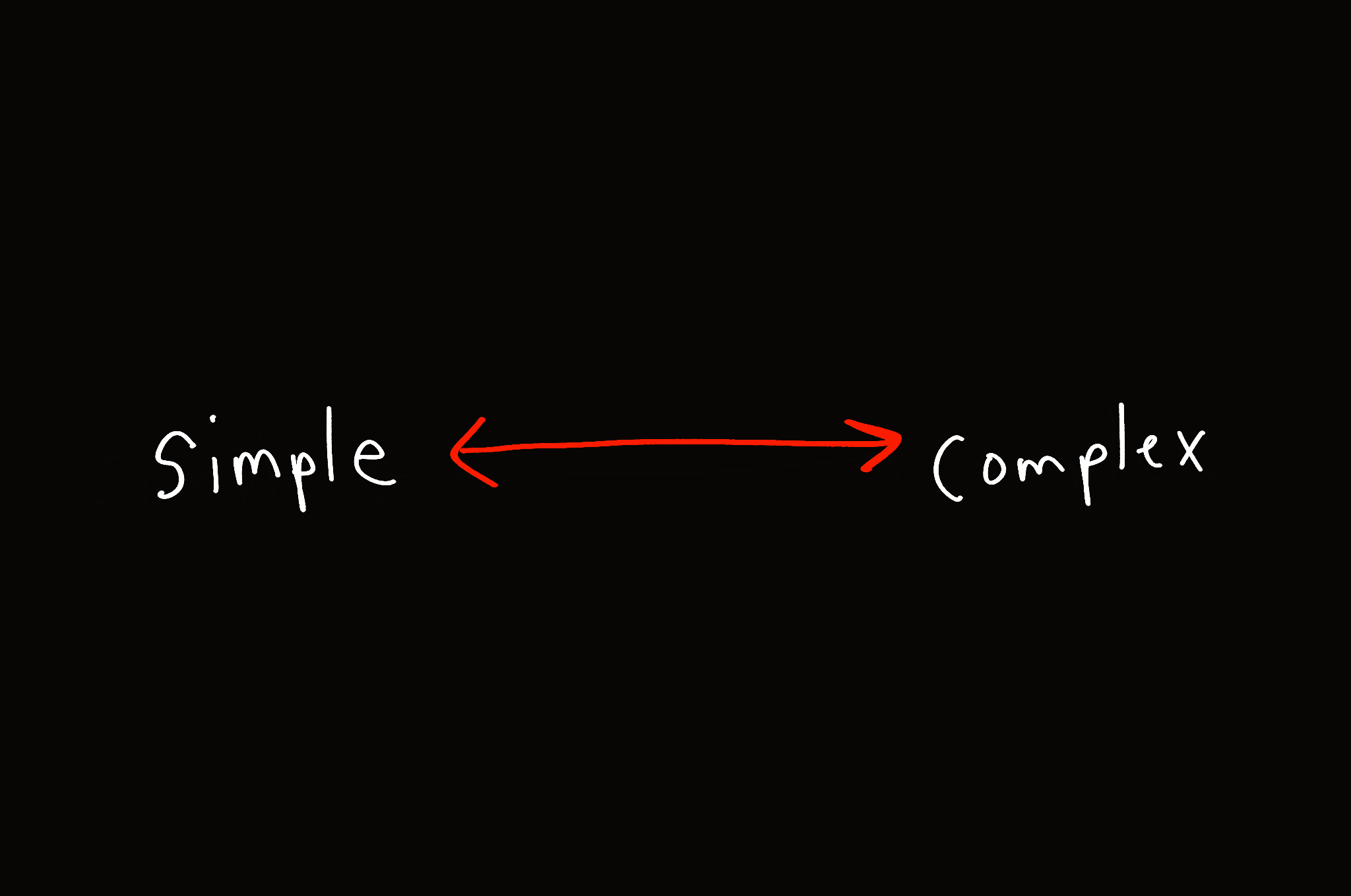
“Simplify” is a popular New Year’s resolution. But, beware of premature simplification. Why?
Because “simplify” doesn’t mean “clarify.” It simply means reduce folds. The word simple comes from Latin simplex, meaning:
one fold
single
“To simplify” literally means to reduce to a single fold.
On the other hand, complex comes from Latin complexus, meaning:
many folds
interrelated
woven together
They are opposites. Simple vs complex.
And here’s where many people (and organizations) get into trouble.
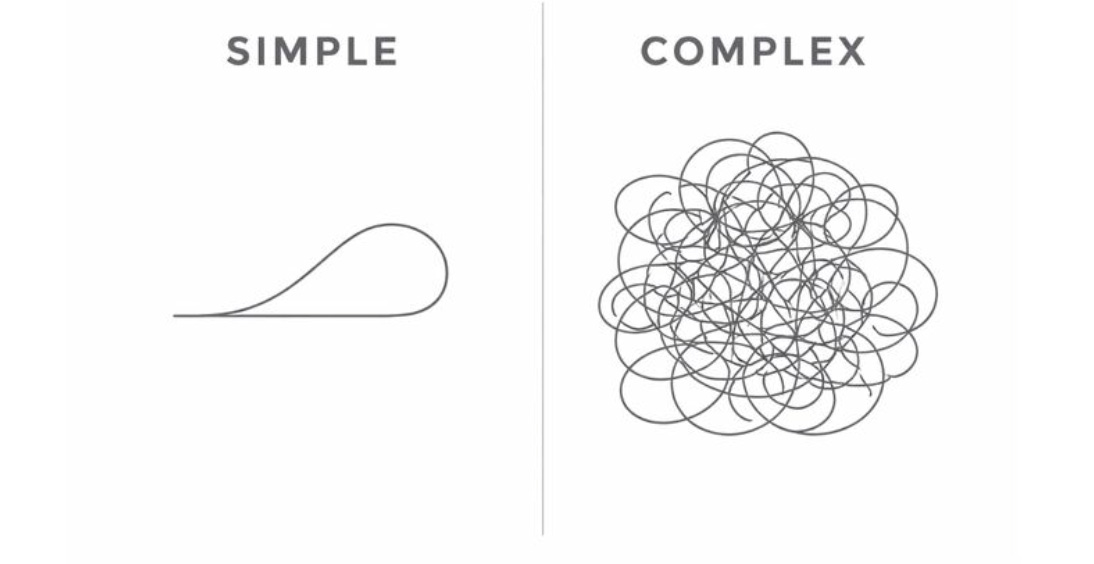
Some Complexity Isn’t Optional
Many folks treat “simple” as good and “complex” as bad— as if complexity is something to eliminate rather than get curious about and maybe understand better.
In complex systems—work, organizations, learning, strategy—complexity isn’t optional. Multiple things matter at once.
They interact. They’re entangled. (And often, we are part of that entanglement.)
Years ago, I read in one of Seth Godin’s books something to the effect of:
We don’t get “stuck in traffic,” we are a part of it.
That line stuck with me because it calls out a reflex we all have. When things feel messy, we want to treat the mess like it’s “out there.” A problem separate from us. Something we can escape by shrinking it.
But often, the issue isn’t complexity. It’s our discomfort with thinking clearly inside it.
Strategically.
(And recognizing our roles within complexity.)
The key task isn’t simplification—It’s often discrimination.
Not discrimination in the social sense—discrimination in the thinking sense: the ability to tell things apart (“distinguish between”).
A strategic mind can hold complexity without getting lost in it. Because “strategy” and being strategic are about:
making clear choices
establishing clear boundaries
focusing on what NOT to do (as much as what to do)
Here’s an illustration that I used ChatGPT to assist with in a recent LinkedIn post 👇
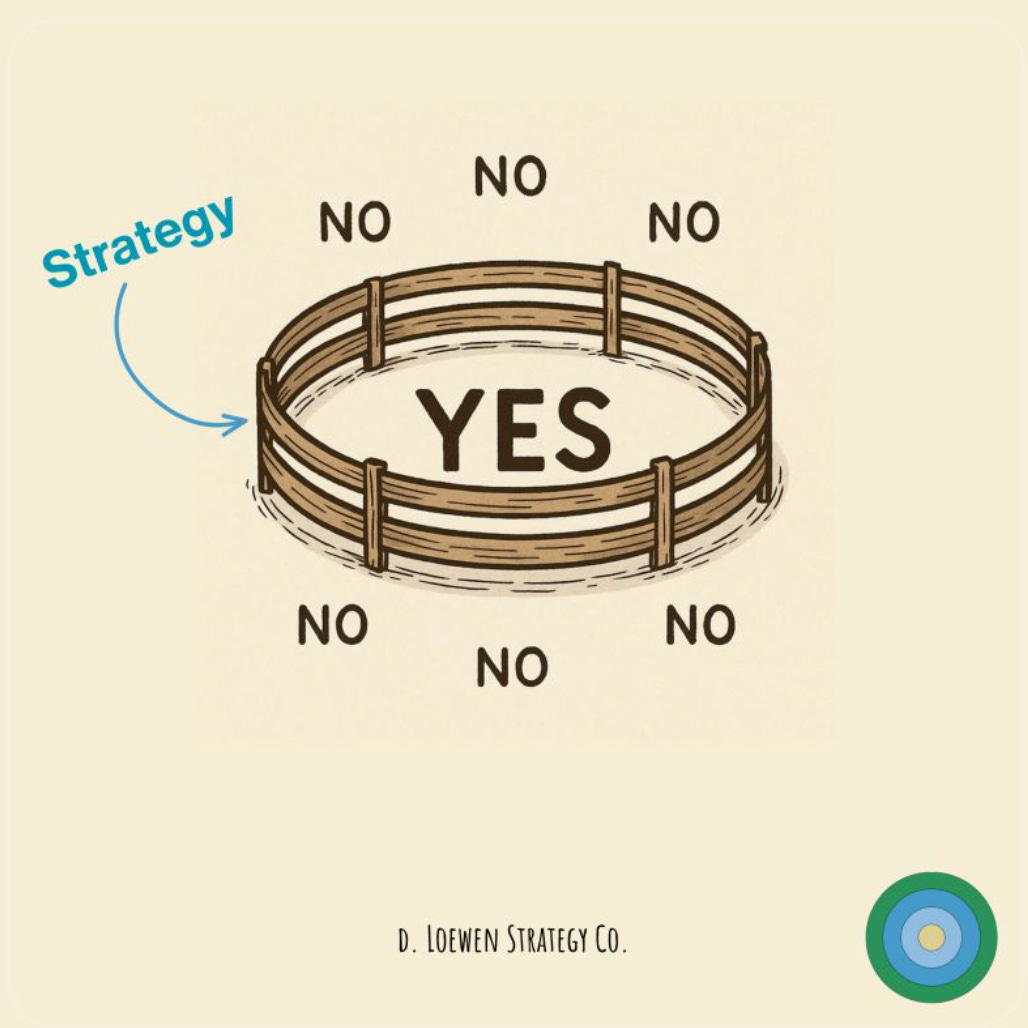
The fence represents clear choices, a clear boundary, and clarity about what we say “yes” to as much as we say “no” to.
This is where premature simplification becomes dangerous. “Simplifying” too early often doesn’t create clarity. It can remove (or ignore) important information—sometimes critical information.
It compresses reality until only the convenient parts remain. And then we’re surprised when:
blind spots show up later
hasty decisions result in unintended consequences
the plan doesn’t survive contact with complex environments
Often, a good strategy doesn’t erase complexity by jumping to “simplifying” (the opposite side of the spectrum).
Complexity Doesn’t Need to be Erased
Instead, it can be valuable to make relationships visible:
What matters?
What’s connected?
What can be ignored?
What influences what?
What cannot be ignored—even if you wanted to?
That’s the heart of strategy, too. Not reduction for its own sake. But responsible reduction after building more understanding.
Two stronger questions for the year
So this year, maybe instead of jumping to: “How do I/we simplify?”
More strategic questions may be:
👉 “What complexity might I need to understand better, not try to escape?”
And a second one that people skip:
👉 “What’s my role(s) in this complexity?”
Because “simple” reduces, yes. But “complex” is relational. And confusing “simple” with “clear” causes people and organizations to make poor decisions, often as an unintended consequence of premature simplification.
Where This Gets Expensive in Creator Businesses
Creative and creator economy-related work is a complex system: identity, voice, audience, offers, energy, and economics are all intertwined (to name a few)
Premature simplification can show up as:
“I just need to pick a niche.”
(When the actual work is often coherence: what you stand for, who you help, and why people trust you.)
“I just need to post consistently.”
(When the key work is signal quality: what you’re reinforcing and whether it sticks (consistently). And whether it also still resonates with you, not some strategy a hustle-bro-guru recommended.)
“I need just one offer.”
(When the work is fit: what people actually want from you, and what you can sustainably deliver.)
“I need more followers.”
(When the real work is trust depth, relationship, conversion, and a clear path from attention to value.)
In The Creator Economy (and many Soulpreneur ventures), premature simplification often creates a business that looks neat—but doesn’t hold.
In over three years in this work, I’ve seen multiple creators and businesses fizzle out and disappear (sometimes overnight), especially after repeating the common mantras above.
A practical test
If you want a simple test (yes, ironically):
👉 If simplifying makes you feel relieved rather than clearer, you might be falling prey to premature simplification.
Because clarity doesn’t come from reducing complexity on contact. It comes from understanding it long enough to reduce (and simplify) responsibly.
So yes—simplify.
But do it after you can name what you’re losing by simplifying. That’s not overthinking. It’s strategy.
Beware of Premature Simplification.
If you’re on LinkedIn, I recently added complexity by segmenting my different work and areas of expertise. Box Cutter Co. has its own organization page, and I’ve recently added D. Loewen Strategy Co. (and it’s already up to 80 Followers in just a few weeks).