
When You Realize "Life Is Long" (Your Creative Enterprises Can Shift to Match)
Box Cutter Co. Free Issue No. 91

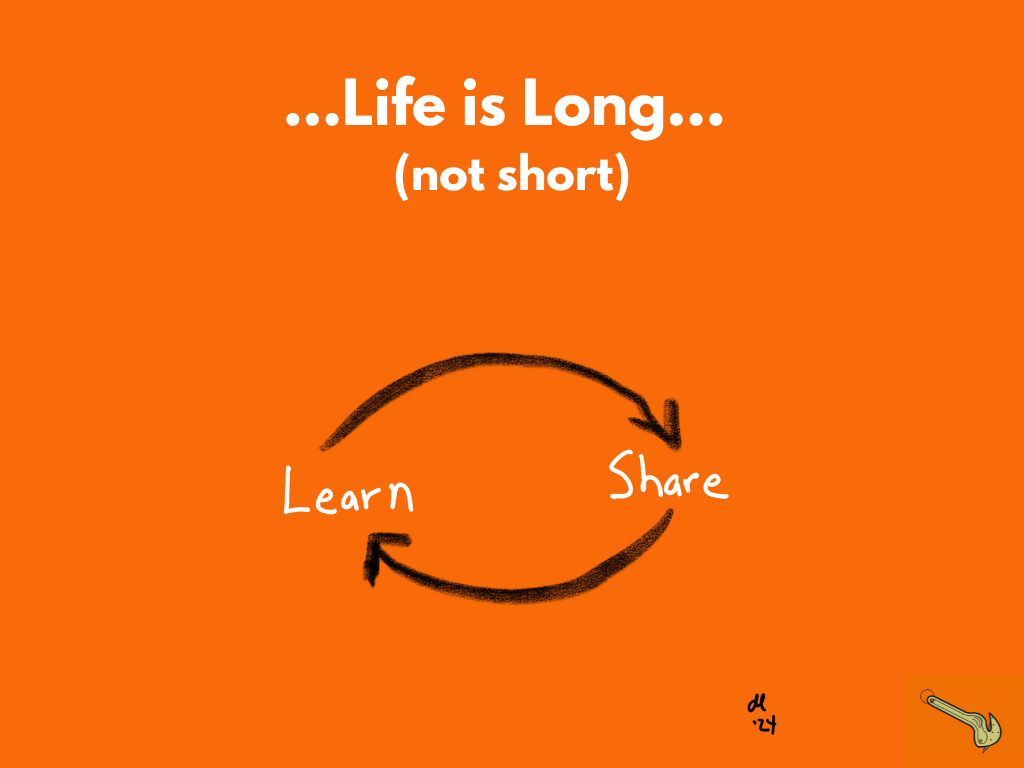
Have you uttered the phrase “life is short”?
I have, and I no longer do.
It survives mainly because it flatters human impatience and our constant search for novelty. Our brains are wired for it.
But it also excuses and supports shallow thinking. It can distract us from an authentic audit of how we’re actually living. A lot of advice built on “life is short” collapses the moment we examine it—even briefly.
In our household, we stopped using and taking this shallow slogan at face value. Upon examining it deeper, things shifted.
On the obvious front… Life didn’t feel short anymore. (What’s the rush?)
Life feels long—long enough to live intentionally, authentically, deliberately, and:
live thought-full-y.
Which brings me to the recent season when I stepped back from the creative enterprises. Or… at least slowed down some production and output.
Over 2 Million Words Published (Then Pressed Pause)
I walked away from corporate public sector employment in early 2022. For three years, I wrote and published as if I had unlimited things to write, a bottomless well of creativity:
Almost 400 articles on Medium
Nearly 200 Box Cutter Co. issues
More than 1,000 LinkedIn posts (on my profile)
This is also in the midst of my wife Lisa Loewen MAIS, RCC, and I launching our little education startup Humanity Academy. We wrote and designed several free 5-day email courses, along with one larger multi-module course each. Plus articles and newsletters and social posts.
Two years ago, Lisa also left the world of employment and started her own private counselling therapy practice (part of Humanity Academy).
In the meantime, I continued securing consulting contracts, Ghostwriting projects, and teaching six university-level online Communications courses, plus taking on some curriculum and course-writing contracts.
We also have three kids—two that have launched into young adulthood, and one in their last years of high school.
It’s a full life. Not generally frantic, but busy. Often… busy enough.
Plus, it’s an intentional commitment by both of us to honest, authentic, meaningful work, as business owners, and not as employees.
Then…
…last spring, a realization kept surfacing in my regular writing in a Learning Journal, plus thinking, reflecting, pondering:
I was producing (often relentlessly), but I wasn’t replenishing and refuelling at the same rate.
At the same time as I was writing and publishing relentlessly, I was also in the heart of course development for a client — micro-credit courses for First Nation communities in western Canada.
Added to that, over the past year and a bit, I’ve also assisted nonprofits in raising well over $1 million and assisted in facilitating some development and governance work.
So, in the late spring, I decided it was time for a summer of less relentlessness on the writing and publishing front. I asked myself more frequently, things like:
“Why the drive to overachieve, overproduce, outperform?”
And… I decided to provide more quiet, steady focus to my consulting work and wrap up some curriculum writing projects for the open online learning program I work in.
I also decided to combine this with:
More time outside
More riding my bike
More golfing with our youngest
More thinking without writing and publishing relentlessly
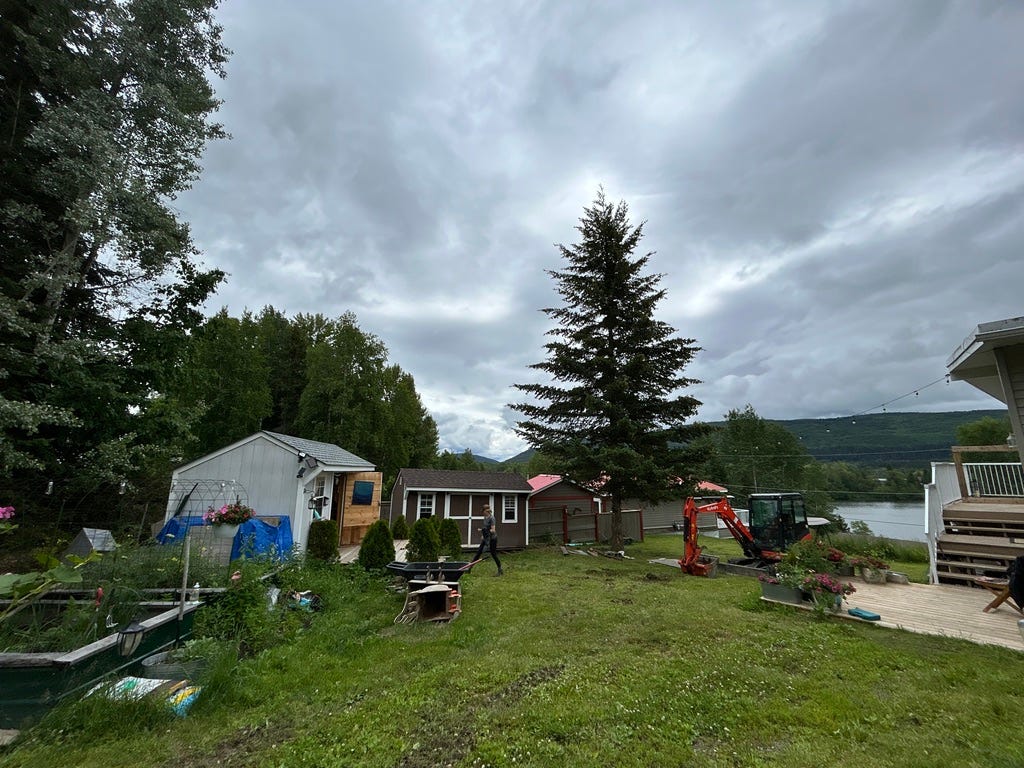
And in that pause, some longer, sustainable shapes of things began to emerge. Plus, we also installed/built another studio on our property. Lisa has had one since we moved in about 5 years ago.
We added a second to be my ‘office’ and creative space (the brown one below).
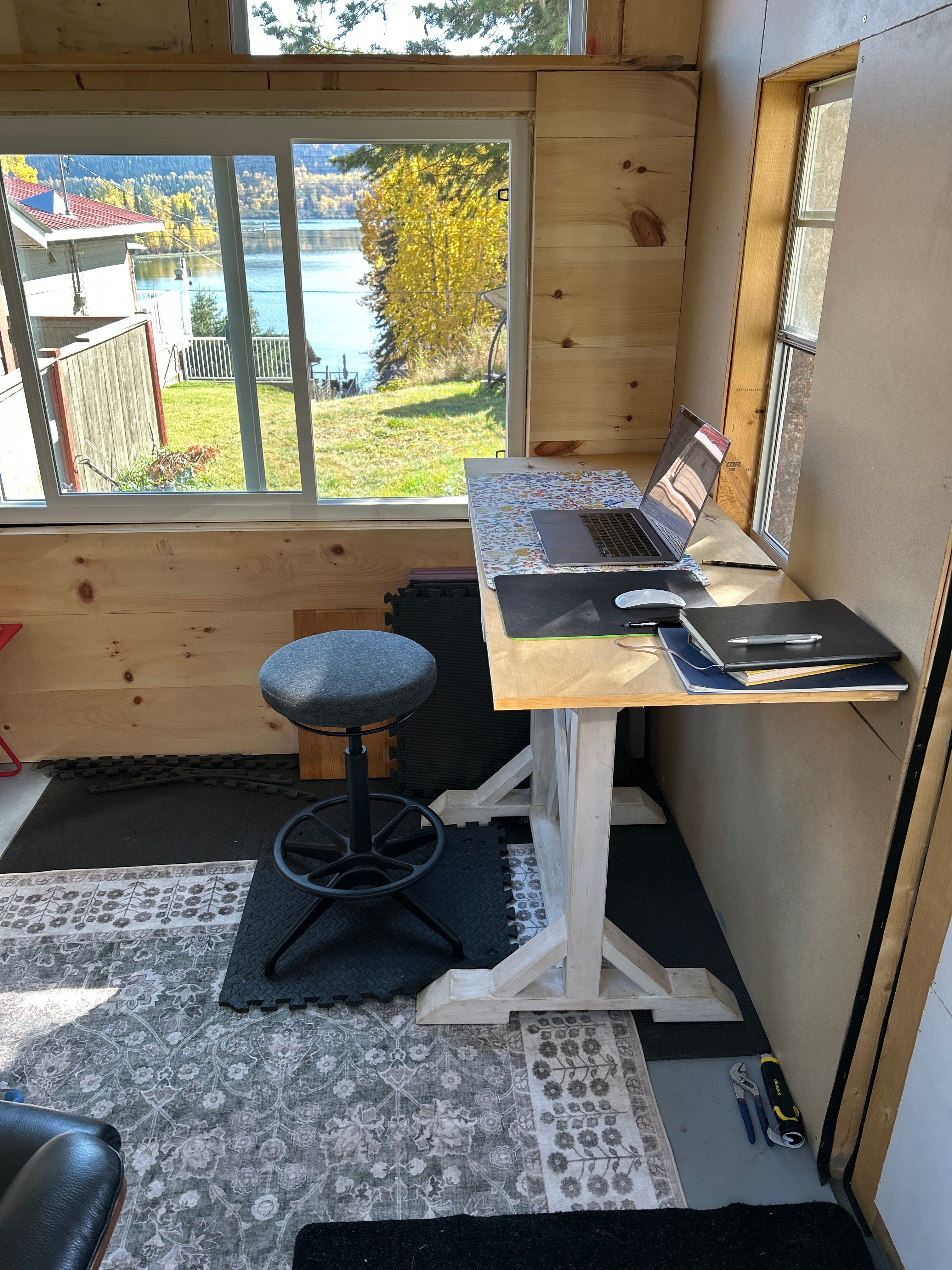
And, now, my office/studio has one of the best views on the property.
1. Creative Enterprises Don’t Have to Be Built for Speed (Build for Longevity Instead)
There’s a modern superstition… faster is better (closely connected to “life is short”).
Linked to this are ideas that speed is proof of ambition, and slowness is some moral failing. But, I’ve come to recognize, when I stop chasing “more,” I begin to see more hidden math and hidden stories — that I probably don’t need to carry any longer.
Over the longer term, “enough” is sturdier than frantic ambition.
“Enough” lets you steer into the skid when life swerves.
“Enough” doesn’t require you to perform urgency (often, that you don’t feel).
I experienced too much of that as an employee, especially healthcare — living and accomplishing on others ‘urgent’ agendas and career trajectories.
The digital world — and Creator Economy — is full of high-urgency creators. Post and publish relentlessly. Treating creativity like endless extractive wells. (Or, simply offloading it to ChatGPT, Claude, and Grok…)
Look across Substack, especially Notes, and your feed is most likely plugged like mine, with: “How to Grow on Substack” posts, advice and newsletters. (It’s not all that different on Medium, or multiple other platforms).
Many of these operate from the “Life is short…” myth.
When I step back from that, and reflect, I realize…
No, actually… Life is Long… the false urgency and “Post, Grow, Post, Grow” of The Creator Economy flutters away, like I’ve put on noise-cancelling headphones, or retreated to a mountainside far from urban kerfuffle.
I’m interested in living a life full of creativity and writing, BUT…
…in a way that’s sustainable across a long life. I call it: sustainable.
1.1 A Recent Reflection on a Successful Creator Drove This Home For Me
I’ve appreciated reading stuff from successful creator Jay Clouse. He’s open and transparent about his work. In a recent newsletter, he shared the graph below, which illustrates his Annual Profit and Losses (P&Ls) for his Creator Economy business (e.g., “The Lab”).
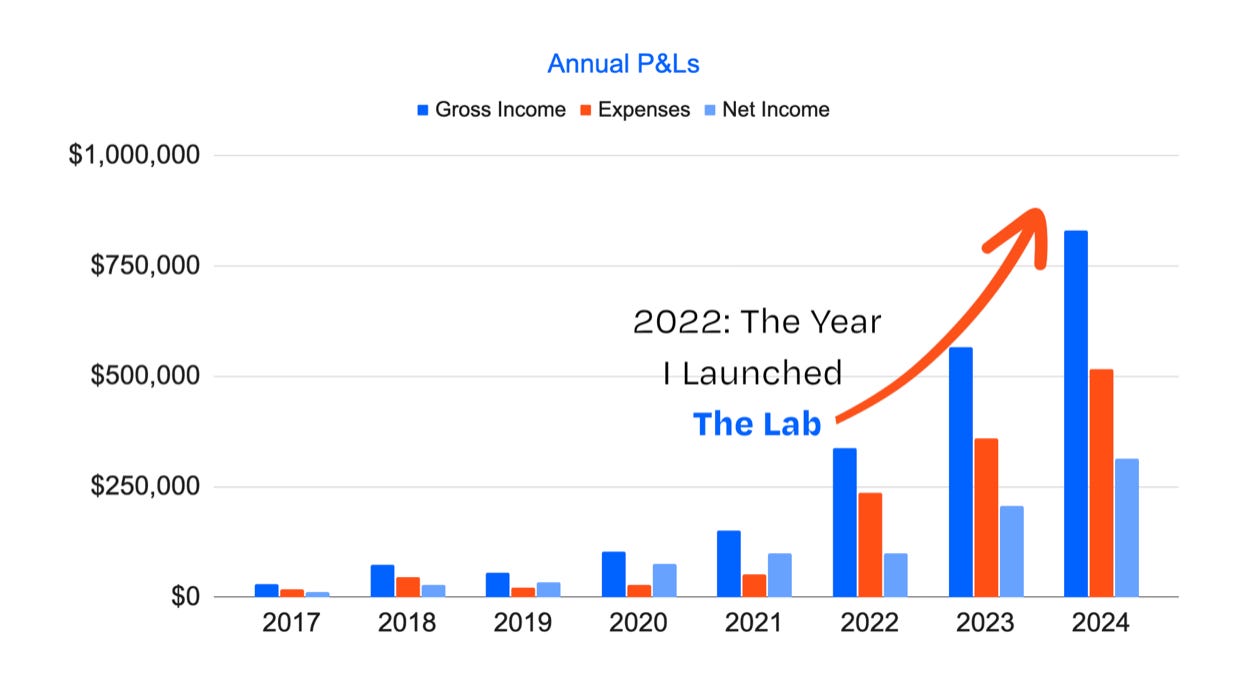
I was struck by the level of output (expenses) and its relation to net income. Last year, he had about half a million dollars ($500,000) in costs, which when subtracted from gross income, generated a bit over a quarter million ($250,000) in net income.
Good on ya, Jay! And, thank you for sharing these openly.
What got driven home for me…
…was that at this juncture, my (and our) creative and professional enterprises require a fraction of those expenses/costs to generate net incomes not that far off (granted the graph is US$).
Not a criticism in the least… simply an observation of differences in business models and approaches. We’ve made a conscious choice to not spending an inordinate amount of time ‘online’ —
…or “on the line” from the old Hollywood movie (2013) “The Internship” with Vince Vaughn and Owen Wilson.
2. “Life Is Short” Makes Us Hurry (“Life Is Long” Keeps Us Real)
I often find “Life is short” is a slogan of the rushed, restless and dicontent. Shift one word to — “life is long”— and the pressure (often false) shifts.
Step back, slow down, and presto, there’s breathing room:
Time to think deeper before publishing
Space to build slowly rather than inflate unsustainably
Room to design creative work outlasting the latest trend and fuss cycles
I see too much creative anxiety emanating from those pretending we’re running out of time.
But when we shift from “life is short” to “life is long,” we might realize we’re simply running out of patience, not years.
And patience is a renewable resource (if you stop sprinting relentlessly).
3. Quiet Seasons Are Critical “Creative Infrastructure”
Stepping back late this spring didn’t make my work any more fragile or unstable or precarious.
It actually facilitated clearer thinking and vision on the distinct future structures of my creative work and enterprises.
I realized, much more clearly, how I wasn’t building one business; I was designing and establishing more of a creative ecosystem. Recently, I started laying this out more clearly with distinct LinkedIn pages.
D. Loewen Strategy Co. — the consulting and client arm, with its constraints and cadence. This currently takes up much of my time and generates the majority of revenue.
Box Cutter Co. — this is where I write, publish, question, and think in public— specifically about creative business, creative infrastructure, The Creator Economy, and related topics like Soulpreneurship, and so on.
Humanity Academy — the educational venture with my wife Lisa that follows a different rhythm and pace. Small, steady, baby steps—in the midst of a busy solo counselling practice.
I also have my university teaching gigs, which generate good revenue and keep me connected to the higher ed sector. A sector under a lot of pressure to change, and one that often sparks my curiosity on things like governance, strategy, design, and planning.
Upon reflection over the summer and this fall, and as I focused on consulting projects, the creative sparks began to fly again. Sometimes, longevity benefits from clearer boundaries. And even creativity can benefit from guardrails.
4. A Return to Writing and Publishing Without The False Urgency
Coming back to Box Cutter Co. and other creative enterprises feels like easing back into a longer rhythm—one that assumes I’ll still be doing this in ten years, maybe twenty, maybe thirty.
Life is long.
And when you build from that belief, things settle:
Less noise. More meaning.
Less pressure. More clarity.
Less mimicry. More originality.
The ride becomes something one can enjoy—literally and figuratively.
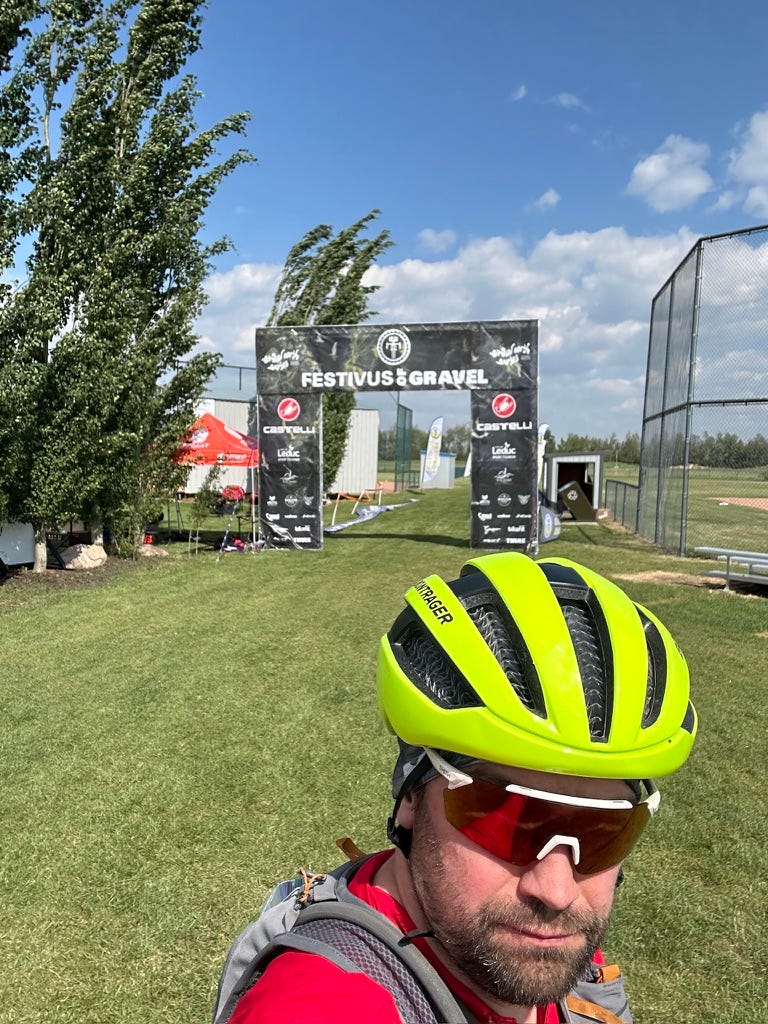
For example, early in the summer, I completed a 190 km (120-mile) gravel bike race, then a 120 km road race, then a 120 km gravel race (all in June).
Three questions to ponder for a long, sustainable creative life:
Where am I pushing for “more” when “enough” could serve me better?
What part of my creative ecosystem might need its own container?
If I believed life were long—not short—how would I adjust my pace?
We don’t need to hurry. Life is long.
Life feels short to me. Maybe that’s why I’d rather spend it creating on my own terms than sprinting for someone else’s stopwatch.
I was so glad to see this post, David!! I, too, have spent the last several months slowing down and examining “pace” and drafted a 6 week course I call “Pace for Space.” I thought I’d offer it in the fall, yet I’m glad I paused to take some time to reflect on the concept. Reading this post was like a high five and “hell, yeah!”
As you note, the hustle/achievement culture in which we live tricks us into the belief that speed and productivity are the best measures of success. However, if we fail to operate at the most sustainable pace for ourselves or learn to adjust our pace as needed and balance with rest/rejuvenation, then we burn out (faster). I don’t believe everyone operates at the same pace, yet I do believe most of us don’t know what our optimal pace is or how to find a pace that is sustainable. I’m hoping that my short course can engage participants in trying to find out.
At the same time, I completed my 200 hour yoga training with a thesis focused on developing a Yoga for Educators program. Having retired from 36 years of teaching at the secondary and community college levels, I am well acquainted with the pacing and pressures that lead to burnout among educators. A regular yoga practitioner
for 26 years, I also know the value if yoga for sustainability personally and professionally. I’m now working with my yoga teacher and a peer from my training to develop Yoga for Educators workshops. The initial wotkshop will introduce participants to Brahmana and Langhana yoga practices as these are specifically designed to increase and slow (contain) energy respectively. Simultaneously, teachers will learn how they can utilize these practices for sustainability with their teaching/educational careers. Eventually, they will learn how to apply these practices in their classrooms. While there are many “yoga in the schools”
programs, there is a lack of these programs specifically focused on the educators themselves. I’m hoping we can fill that void and support educators, especially teachers, in developing skills to sustain their mind, body and spirit for a career with longevity.
Like you, I have discovered much joy and longevity in slowing down and taking our time. I’m looking forward to taking some time as I consider your questions!